Get in Touch

Portfolio / Case Study

Case Study · Product Management & Web App Build · Events Platform

An events platform that grew from four hardcoded cities into a real product

WhatsNext is a hyperlocal events discovery platform for North San Diego County. Over eight months we ran it as technical product manager and builder: user accounts, business storefronts, a database-driven city system, an events ingestion pipeline, and the admin tooling that keeps it all honest.

Platform
WhatsNextwhatsnext.buzz · events discovery, North San Diego County
Engagement
Technical product management + buildDecember 2025 to July 2026, ongoing
Scope
Full web applicationDiscovery · accounts · storefronts · admin · integrations
Stack
React + SupabaseTypeScript, Tailwind, Postgres with RLS, Edge Functions
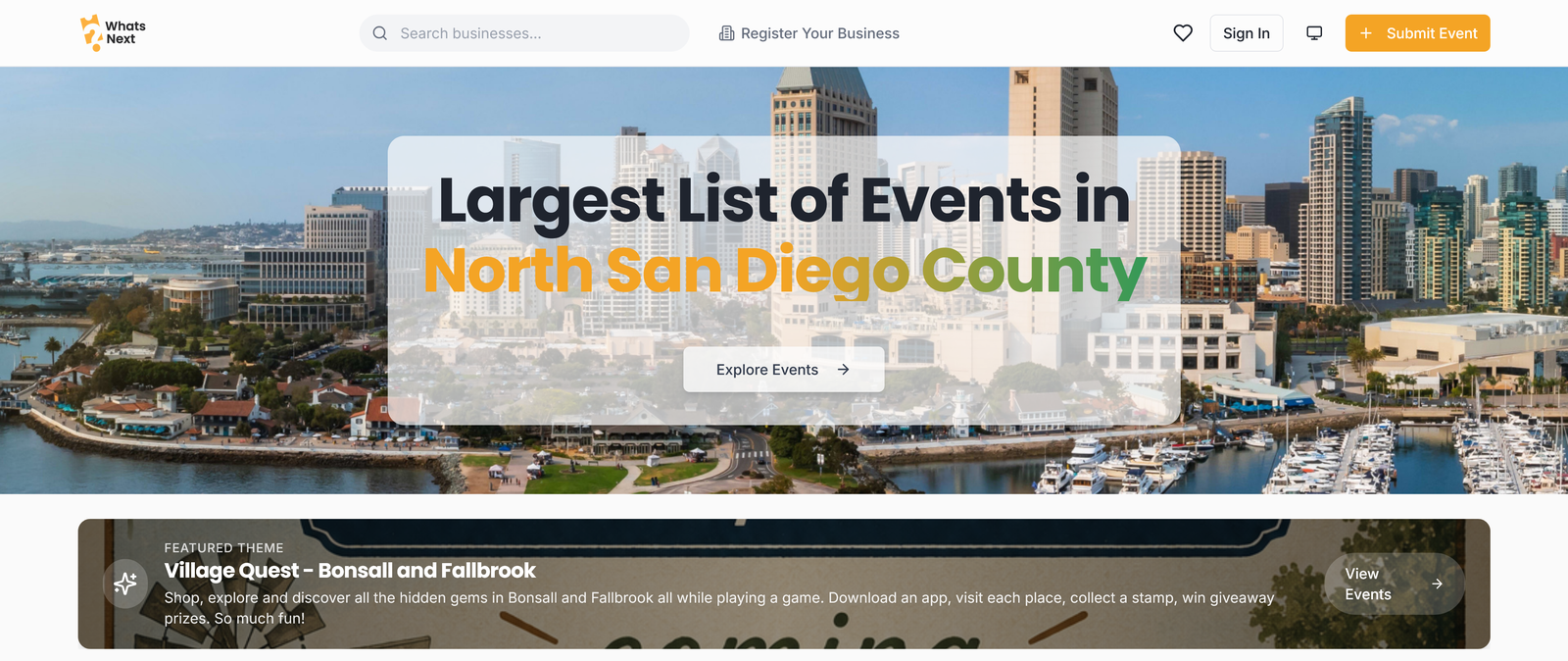
WhatsNext homepage: events in North San Diego County, with search, business registration, and event submission

The platform

Seven cities, one place to find what's on

WhatsNext helps people in North San Diego County find local events: Oceanside, Carlsbad, Vista, San Marcos, Escondido, Fallbrook, and Bonsall. Community members submit events, businesses run their own storefronts, and city agents manage their patch from a scoped admin panel.

The platform is owned by Dave Mears (NextHQ), with GoHighLevel as the back-office CRM. Nexum-sol's Abdulmuiz ran the product and the build: writing the PRDs, making the architecture calls, and shipping the features.

This is what our Custom Web Application service looks like in practice.

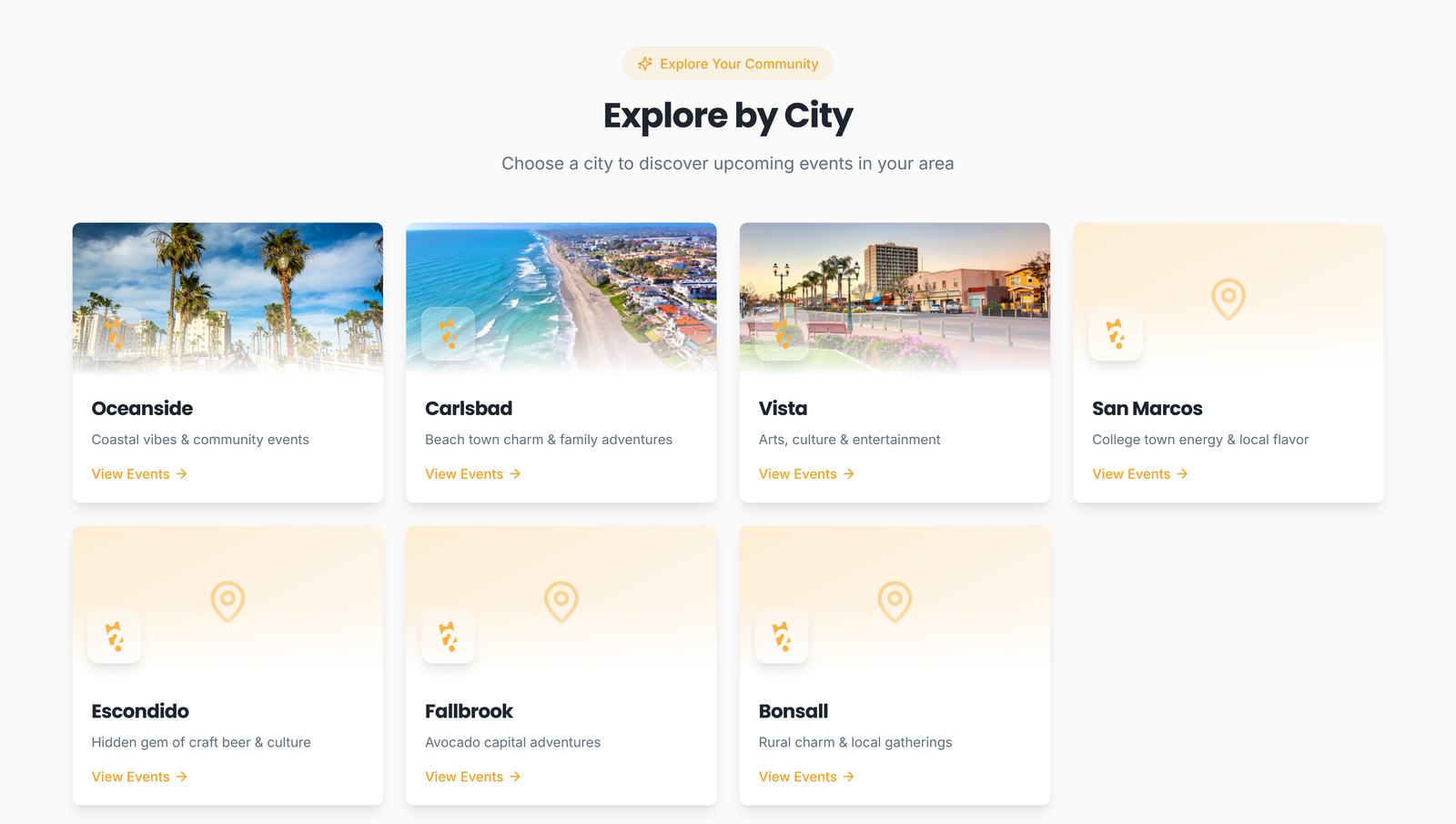
Explore by City section with cards for the seven North County cities
Explore by City · seven cities, driven by a database table, not code

The challenge

From a promising site to a platform that can carry a business

When the engagement began, WhatsNext was a working events site with real limits baked in. Growing it meant treating it as a product, and every limit below became a workstream with its own PRD.

C-01

Cities were hardcoded

Four city names lived in the code itself. Adding a fifth meant a developer, a code change, and a deploy. The plan called for seven cities and room for more.

Limit
C-02

Nothing belonged to the user

No accounts, no saved events, no way to keep what you found. Every visit started from zero.

Limit
C-03

Businesses had no home

Local businesses are the platform's natural paying customers, and there was nowhere for them to exist: no storefronts, no claim process, no self-service event management.

Limit
C-04

Content depended on manual entry

Every event had to be typed in by hand. A discovery platform with thin listings answers its own core question badly.

Limit
The core insight

A platform is what remains when the builder walks away. Every workstream moved something from code and manual effort into data and self-service: cities became database rows, admin became role-scoped, content grew its own pipeline.

The working method

Specify first. Preview before build.
Trust the server, never the browser.

Every feature started as a written PRD before a line was built. UI changes were rendered as previews before committing. And every rule that matters (who owns a business, who can edit a city, what counts as saved) is enforced in the database with row-level security, out of reach of a curious browser console.

PRDs, workstreams, amendments

The feature roadmap ran as lettered workstreams (accounts, storefronts, personalisation, external events), each with its own PRD, and changes landed as amendments rather than silent rewrites. Sessions months apart picked up cleanly because the paper trail is real.

Security treated as a feature

A line-by-line security pass hardened the platform: row-level security on business data, a locked-down audit log, storage upload limits, and claim operations moved into database functions with guards enforced in SQL.

The build

Five workstreams that turned a site into a platform

Eight months of shipped work, in the order it compounds.

01 / FOUNDATIONS

Cities as data, not code

A cities table became the single source of truth: name, tagline, coordinates, region, active flag, display order. Seven cities seeded, every hardcoded array removed, and a super-admin screen for adding the eighth.

  • Adding a city is now a database operation. No developer, no deploy.
  • Navigation, search, and admin scoping all read from the same table, so nothing drifts.
City cards for Oceanside, Carlsbad, Vista, San Marcos, Escondido, Fallbrook and Bonsall
Seven cities today, unlimited by design
02 / USERS

Accounts that earn their signup

Saved events with smart folders: tap the heart, the event auto-tags itself into one of eight categories, and the visitor keeps five saves free before an account is asked for. On signup, their saves migrate from the browser into the database and follow them across devices.

  • Progressive auth: value first, signup second.
  • The save system also accepts external links (Facebook, Instagram, Eventbrite), scraped safely server-side.
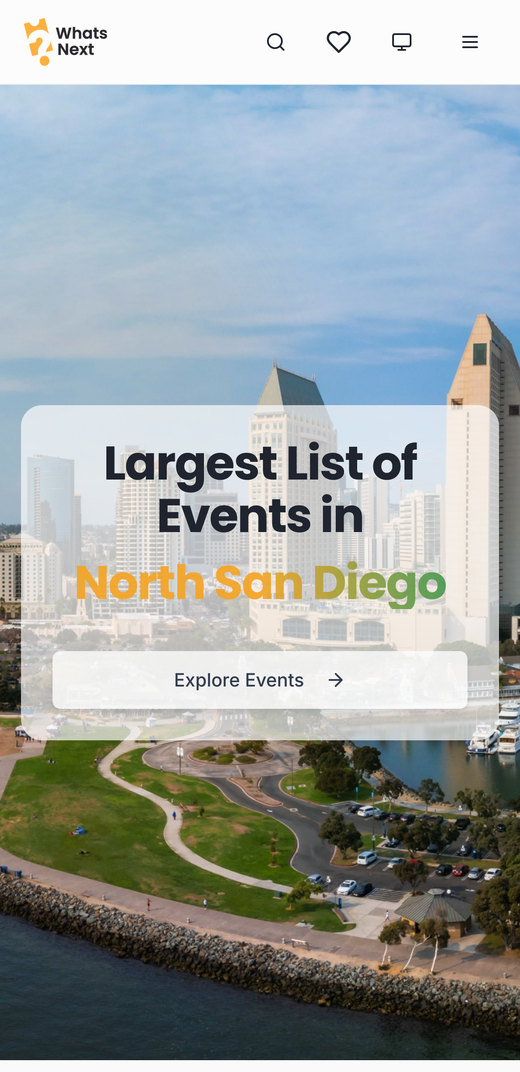
WhatsNext on a phone-sized viewport showing the hero and city exploration
Mobile · where local event discovery actually happens
03 / BUSINESSES

Storefronts with a real claim process

Businesses get public storefront pages with their own event management. City agents can create a storefront on a business's behalf during a field visit; the owner later claims it through an invite flow whose ownership rules are enforced in the database, atomically.

  • Registration is free; access to premium features is gated, following the pattern of the platforms businesses already know.
  • Every registration fires a webhook into the owner's CRM, so the back office updates itself.
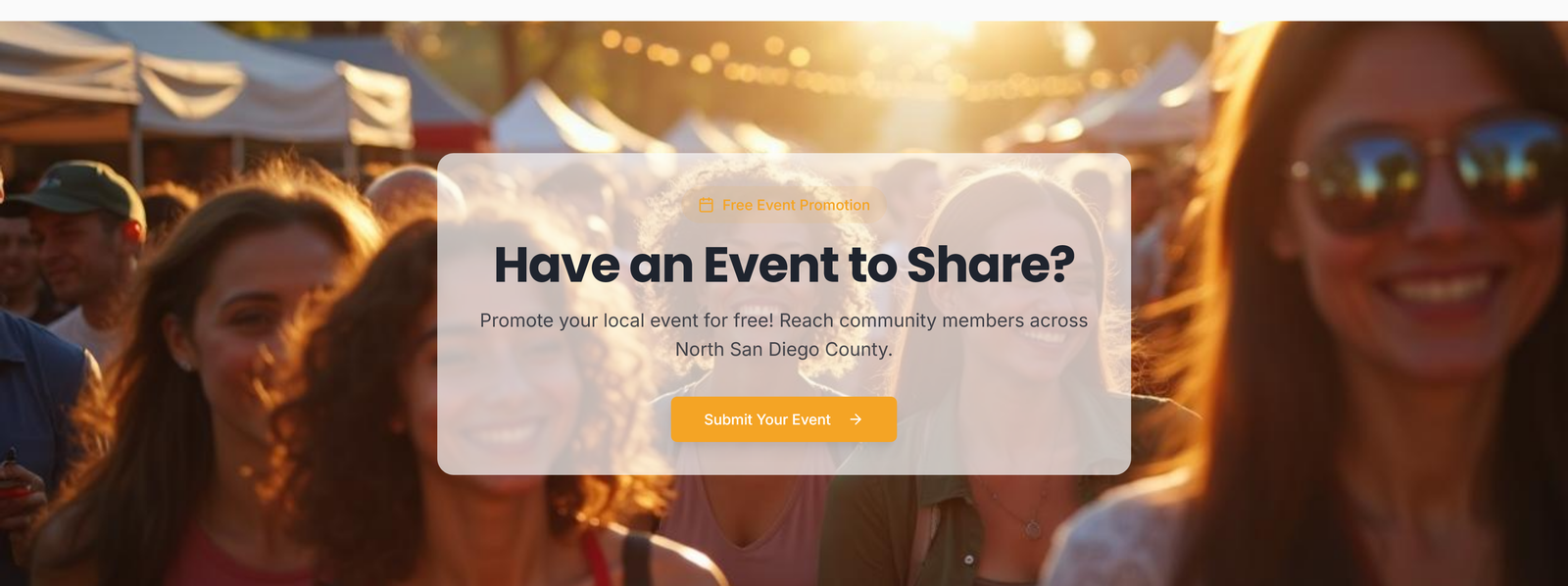
Have an Event to Share section inviting free community event promotion
Community submissions stay free · the growth loop that feeds listings
04 / CONTENT

An ingestion pipeline instead of a typing job

An Eventbrite ingestion pipeline scrapes, cleans, and imports events through a four-layer QA playbook. Roughly 853 imported events were live at the time of writing, alongside community submissions.

05 / OPERATIONS

Admin that scales past one person

A role ladder (user, moderator, admin, super admin) with city-scoped assignments: an Oceanside agent manages Oceanside. Promotions run on a carousel with automatic expiry, and the moderation queue keeps community submissions accountable.

WhatsNext homepage hero with search and submission entry points
The platform's front door: search, register a business, submit an event
A platform is what remains when the builder walks away. Cities are rows, rules live in the database, and the admin panel does not need us in it.
Nexum-sol, design rationale

Where it stands

Live, growing, and documented

The platform is live at whatsnext.buzz. The figures below come from the project's own build records, July 2026.

7Cities served, database-driven
~853Imported events live via the ingestion pipeline
8moOf shipped workstreams, Dec 2025 to Jul 2026
The part clients care about

Every feature above survives handover. The PRDs, decision logs, and session records exist as documents, so any developer can pick the platform up cold. That documentation discipline is part of the engagement, and it is the difference between owning a product and renting a developer.

Have a product idea that needs an actual builder?

WhatsNext went from hardcoded lists to a self-service platform because someone owned both the product decisions and the code. We do that. Tell us what you are trying to build and we will tell you, honestly, what it takes.

Talk to us about your build → No obligation · Straight answers

👋 Hi there! Have a question or need help with a project? Chat with us on WhatsApp!

1